 Council for
 Ligurian features in “Lara’s language journey through Italy”, the Council of Europe’s educational guide
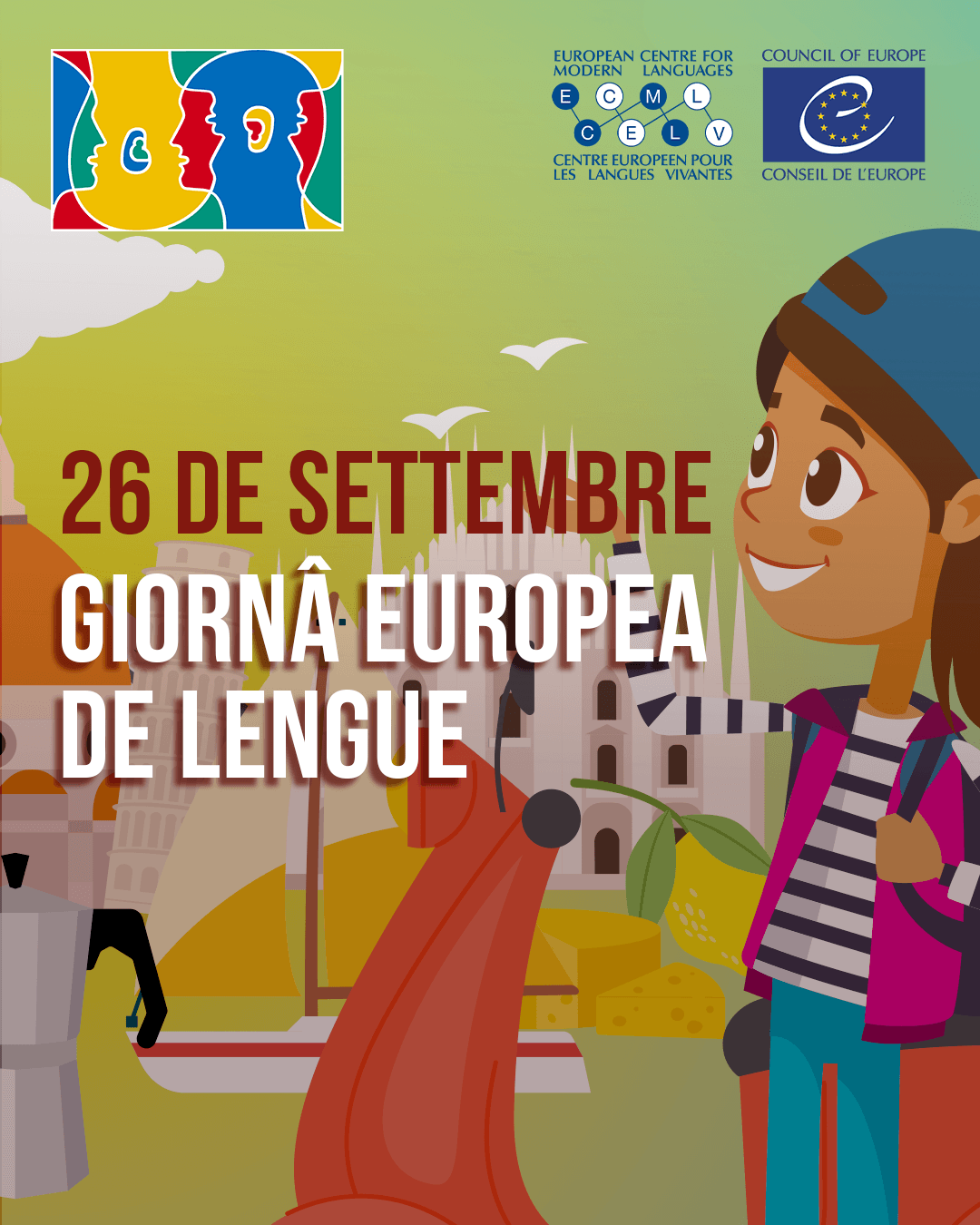
Ligurian is among the languages featured in “Lara’s language journey through Italy”, a new educational guide for schools in Italy and across Europe, published by the Council of Europe’s European Centre for Modern Languages (ECML) to mark the European Day of Languages.
The booklet contains a short introduction to each language spoken in Italy, with common expressions, the numbers from one to ten and a QR code linking to audio recordings of the pronunciation of every word. Ligurian is introduced as “the language of Columbus and Genoa’s maritime empire”, which still “remains an important element of regional identity” today.
The guide introduces students to Italy’s rich linguistic heritage and encourages them to move beyond the idea of Italy as a monolingual country, pointing out that before 1861 over 95% of Italians did not speak Italian in everyday life. The spread of the national language in the twentieth century often led to the marginalisation of regional languages, whose use was often discouraged and punished in schools.
The publication explains that the so-called “regional languages” have been misleadingly called “dialects”, although they are languages in their own right, with their own grammar, history and literary traditions, and are recognised by international codes such as ISO 639‑3. Still spoken by millions of people, these languages form a cultural heritage that needs to be preserved.
Lara’s language journey through Italy is available free of charge (currently in English) on the project page and as a PDF download.
The project was developed in collaboration with CLIRD (Coordinamento Lingue Regionali e Diritti linguistici, the coordinating body for regional languages and linguistic rights), with specialist support from its member associations for the eight regional languages they represent (Emilian, Ligurian, Lombard, Neapolitan, Piedmontese, Romagnol, Sicilian and Venetian), including the Council for Ligurian Linguistic Heritage.
“It is a great source of satisfaction to see our linguistic heritage recognised in a Council of Europe initiative. We at the Council for Ligurian Linguistic Heritage are pleased to have contributed to this project, which gives younger generations the chance to discover the linguistic richness of Liguria and Italy,” says Jean Maillard, president of the Council for Ligurian Linguistic Heritage.
“‘Ligurian language’ is a term used internationally to refer to the Romance varieties spoken in Liguria or, to be more precise, the Romance varieties that linguists classify within the Ligurian group on the basis of specific criteria,” explains Stefano Lusito, a researcher in linguistics and a member of the Council. “This family also includes varieties spoken outside the region’s borders, such as Monégasque and Bonifacino. That said, when people speak of ‘Ligurian’, the reference variety is almost always Genoese, the most widespread variety and, above all, the one with the greatest historical prestige.”